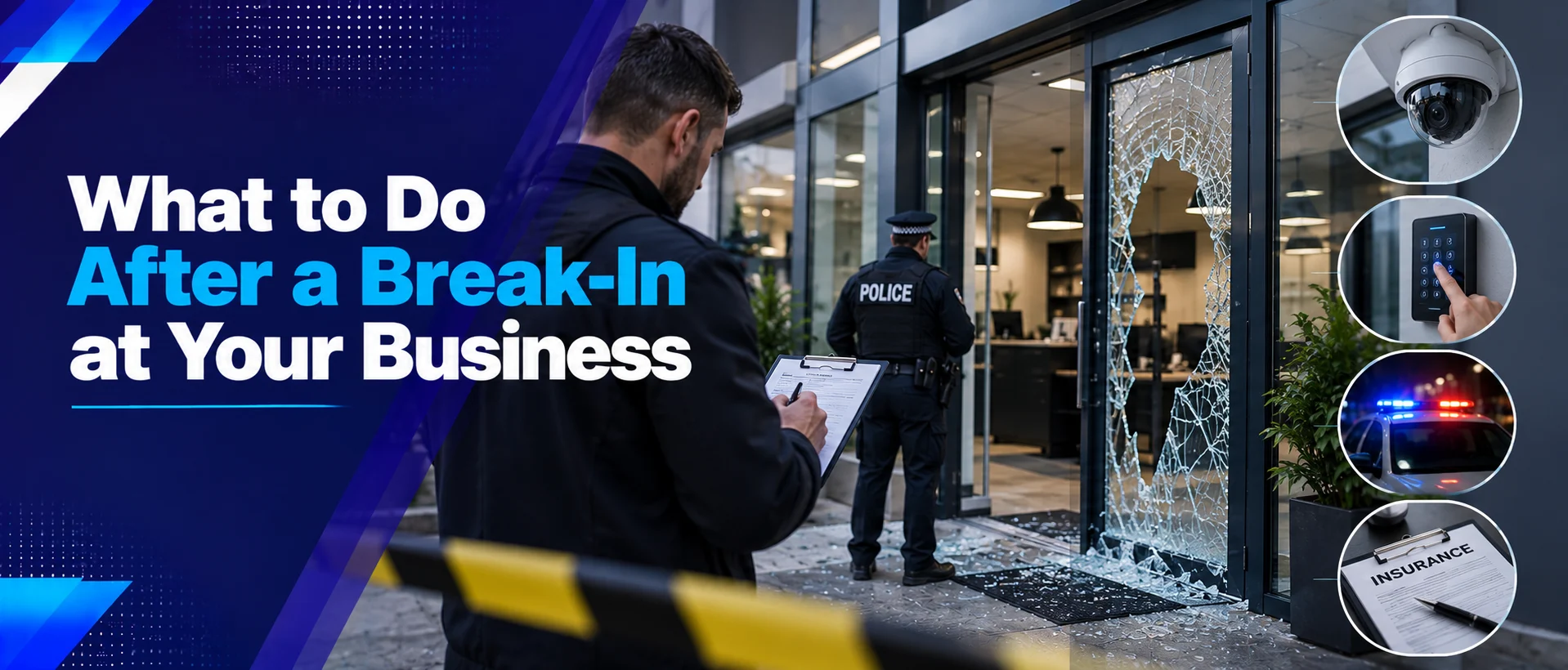
Discovering that someone has broken into your business premises can be stressful. Alongside the immediate concerns about staff safety, stolen equipment and property damage, you may need to arrange repairs, notify your insurer and get the business operating again.
Acting methodically can help you protect people, preserve important evidence and reduce the risk of another incident. However, the first priority is always safety. Do not enter a building if you believe an intruder may still be inside.
This guide explains what UK businesses should do after a break-in, from reporting the incident and preserving CCTV footage to securing damaged entry points and reviewing the site's security arrangements.
What Should You Do Immediately After a Business Break-In?
If you discover a possible break-in, avoid rushing inside or moving items before you understand the situation. Follow these steps in order, adapting them to the circumstances.
- Prioritise safety. If the incident may still be in progress or someone could be inside, move to a safe location and call 999. Do not confront a suspected intruder.
- Contact the police. Report the incident and follow their instructions. Use 999 for an emergency or crime in progress; use 101 or the appropriate online reporting service for non-emergency reports.
- Keep people away from affected areas. Avoid walking through damaged areas or touching items that may provide evidence.
- Preserve CCTV footage. Keep relevant recordings safe and avoid switching off or resetting the recording equipment.
- Record what you can safely observe. Note the discovery time, visible damage and any missing items without disturbing the scene.
- Notify your insurer. Check your policy requirements and ask how emergency repairs and evidence should be documented.
- Arrange suitable security repairs. Once the police have advised on evidence collection, make the premises safe and secure against further access.
Police.uk provides further guidance on preserving forensic evidence after a burglary.
1. Make Sure Employees and Visitors Are Safe
Before thinking about stolen property or repairs, establish whether anyone may be at risk. A damaged door, broken window or disturbed room could indicate that the incident has only recently occurred.
If you suspect the offender is still inside, do not investigate the building yourself. Move away, keep others clear and contact the police.
If an employee, contractor or visitor may have been involved in a confrontation or suffered an injury, arrange appropriate emergency assistance.
Once the immediate danger has passed, restrict access to unsafe areas. Broken glass, damaged electrical equipment, exposed wiring and unstable doors can create additional hazards.
2. Report the Break-In to the Police
Report the incident promptly and provide as much accurate information as you can. The police may ask when the premises were last known to be secure, when the break-in was discovered, how entry may have occurred and what appears to be missing.
Useful information can include:
- The business address and the affected areas.
- The approximate time window in which the incident may have happened.
- Visible damage to doors, windows, shutters or gates.
- Descriptions of missing equipment, stock, tools or other property.
- Potential witnesses or relevant vehicle details, if known.
- The location of CCTV cameras and any available recordings.
- Any signs of forced entry or objects that may have been left behind.
Keep the incident or crime reference number provided by the police. Your insurer may request it as part of a claim.
For further guidance, visit Police.uk's advice on protecting businesses from burglary.
3. Preserve Evidence Before Cleaning or Repairing the Premises
After a break-in, it can be tempting to clear up broken glass, move furniture or begin repairing the damaged entrance immediately. Where possible, leave affected areas undisturbed until the police have advised whether they need to examine the scene.
Potential evidence may include fingerprints, footwear marks, damaged locks, tools, blood or other traces left by an intruder.
What should you avoid touching?
- Damaged locks, handles and door frames.
- Broken windows and the surrounding frames.
- Objects that appear to have been moved or left behind.
- Items that may have been handled by the intruder.
- Visible footwear marks or other potential forensic evidence.
If an area presents an immediate safety risk or the building needs urgent protection, tell the police and follow their advice about securing it. Photograph visible damage before emergency work where it is safe to do so.
Keep a record of any emergency work and avoid unnecessary handling of damaged surfaces. Police.uk explains how to preserve potential evidence and manage CCTV recordings in its forensic evidence guidance.
4. Secure CCTV Footage and Other Digital Evidence
CCTV footage can help establish when the incident occurred, show possible entry routes and provide images of people or vehicles associated with the event. Recordings from neighbouring businesses, door-entry systems or other cameras may also be relevant.
How to protect your CCTV recordings
- Preserve the original recording. Do not delete, overwrite or reset footage that may be relevant.
- Identify the time window. Check when the property was last secure and when the incident was discovered.
- Save a separate copy if possible. Export relevant footage using the system's normal process and keep the original recording intact.
- Check the time and date settings. Note any discrepancy between the camera timestamp and the actual time.
- Keep a record of the export. Note which cameras were involved, when the footage was saved and who handled it.
- Tell the police that footage is available. Follow their instructions about providing recordings.
Police.uk advises preserving the recording system and, where possible, saving relevant footage without deleting it from the original device.
Read our commercial CCTV installation guide to understand how camera coverage can support a wider security plan.
What if your CCTV did not capture the incident clearly?
Review the camera angles, lighting conditions, recording settings and any areas hidden by vehicles, shelving or building structures. A camera may be working correctly but still fail to capture useful detail if it is positioned too far from the relevant area.
After the incident, consider whether changes to the camera layout, lighting or recording configuration could improve coverage. Avoid making changes that might destroy existing evidence before relevant footage has been preserved.
5. Document Missing Items and Property Damage
A detailed record helps you understand the extent of the incident, organise repairs and prepare information for your insurer.
Create a list of missing or damaged property. Include as much detail as possible, such as:
- Item description and quantity.
- Manufacturer, model and serial number, where available.
- Approximate purchase date and value.
- Receipts, invoices or other proof of ownership.
- Photographs taken before the incident, if available.
- Visible damage to the building or security equipment.
Photograph damage where it is safe and appropriate to do so. Keep photographs, repair quotations, invoices and other supporting documents together in a secure record.
Do not guess the value of missing property if reliable records can be obtained. Separate confirmed losses from items that are still being checked.
6. Contact Your Business Insurance Provider
Notify your insurer as soon as reasonably possible and check the conditions of your policy. Different policies may have different notification deadlines, documentation requirements, excesses and conditions for emergency repairs.
Your insurer may ask for:
- The police crime reference number.
- A summary of what happened and when it was discovered.
- An inventory of stolen or damaged property.
- Photographs and evidence of ownership.
- Repair estimates and invoices.
- Records of emergency work carried out to protect the premises.
Ask the insurer whether it needs to inspect the damage or approve particular repairs before work begins. If emergency work is necessary to prevent further damage or protect people, explain the circumstances and keep detailed records.
For additional information, see the UK business guidance on making an insurance claim for business property and assets.
7. Repair Damaged Doors, Windows and Entry Points
Once the police have advised on evidence collection, the next priority is to prevent another unauthorised entry. The appropriate response depends on the extent of the damage and the type of building.
Temporary security measures
Depending on the situation, suitable temporary measures may include boarding a broken window, arranging an emergency lock repair, securing a damaged door or restricting access to a compromised section of the premises.
Use competent professionals for repairs that require specialist skills. If the damage involves exposed wiring, structural concerns or other hazards, arrange the appropriate specialist assessment before the area is used again.
Review the quality of the original security
Once immediate repairs are complete, investigate how the intruder may have gained access. Consider whether the incident involved a weak lock, a damaged frame, an unsecured service entrance or an area that was difficult to monitor.
Possible improvements include:
- Repairing or upgrading vulnerable locks and door hardware.
- Improving the security of rear doors and loading bays.
- Reviewing window protection and external shutters where suitable.
- Securing gates and access routes.
- Improving CCTV coverage around the entry point.
- Reviewing alarm detection in the affected area.
Police.uk also recommends reviewing vulnerable entry points, service doors, external lighting, alarms and CCTV when improving business security.
8. Check Your Intruder Alarm and Security Systems
A break-in is a good reason to review whether your existing security systems operated as intended. Do not assume that an alarm failed simply because an intruder entered, but investigate whether there were any faults, missed alerts or coverage gaps.
Review the following with your security provider where appropriate:
- Whether the alarm was armed at the relevant time.
- Whether the affected entrance had suitable detection coverage.
- Whether an alert was generated and delivered correctly.
- Whether the nominated keyholder or monitoring contact received the notification.
- Whether CCTV footage was recorded and retained.
- Whether the system clock and event logs are accurate.
- Whether any equipment was damaged, disconnected or tampered with.
Review access credentials and remove permissions that are no longer required. Change compromised codes and passwords using the system's recommended process, while preserving any incident records that may be needed.
Learn more in our article on commercial intruder alarm systems.
9. Improve Lighting and Visibility Around the Building
Poor visibility can make it harder for staff, visitors and security systems to monitor external areas. Review lighting around entrances, car parks, loading bays, rear access routes and boundary gates.
Depending on the property's needs, improvements may include:
- Repairing failed external lights.
- Adding suitable lighting around vulnerable entrances.
- Considering motion-activated lighting in selected areas.
- Adjusting lights to reduce glare and deep shadows in CCTV footage.
- Reviewing how lighting controls operate outside business hours.
Lighting should be designed for the site rather than simply adding the brightest available fixtures. Excessive glare and poorly directed light can reduce visibility and affect neighbouring properties.
For more detail, see our guide to commercial security lighting.
10. Prevent Another Break-In
After the immediate incident has been addressed, carry out a security review to identify what can be improved. The objective is not simply to replace damaged equipment but to understand the weaknesses that allowed the incident to happen.
Review access control
Check who has keys, access cards, alarm codes or other credentials. Revoke access that is no longer required and make sure the business has a clear process for issuing and returning credentials.
Review camera placement
Check whether cameras cover entrances, service areas and other relevant approaches. Look for blind spots, obstructions and areas where night-time footage lacks useful detail.
Our guide to commercial CCTV camera placement can help you review the layout of your system.
Strengthen procedures for closing the premises
Make sure employees know who is responsible for locking doors, checking windows, arming alarms and reporting faults. Use a closing checklist where several people share responsibility.
Review the full security system
Consider the relationship between physical barriers, CCTV, alarms, access control and lighting. Improving one element may not address weaknesses elsewhere in the building.
A structured business security risk assessment can help identify priorities and create an action plan.
Business Break-In Response Checklist
Use this checklist to help coordinate the response. Adapt it to the circumstances and follow instructions from the police and your insurer.
| Priority | Action | Status |
|---|---|---|
| Immediate | Keep staff and visitors safe; do not enter if an intruder may still be inside. | ☐ |
| Immediate | Contact the police and follow their instructions. | ☐ |
| Immediate | Restrict access to affected or unsafe areas. | ☐ |
| Evidence | Preserve CCTV footage and relevant system records. | ☐ |
| Evidence | Avoid cleaning or moving items before receiving appropriate advice. | ☐ |
| Documentation | Record visible damage and prepare a list of missing items. | ☐ |
| Insurance | Notify the insurer and check documentation requirements. | ☐ |
| Repairs | Arrange suitable emergency repairs after considering evidence requirements. | ☐ |
| Security | Check CCTV, alarm operation, lighting and access credentials. | ☐ |
| Prevention | Document security improvements, owners and follow-up dates. | ☐ |
Common Mistakes Businesses Should Avoid After a Break-In
Entering the premises before it is safe
Never put yourself or employees at risk to inspect the building or recover equipment. If there is any concern that an offender may remain inside, move to safety and contact the police.
Cleaning up before evidence has been considered
Moving objects or repairing damage too quickly may disturb evidence. Seek guidance before cleaning affected areas, while taking necessary action to address immediate safety risks.
Deleting CCTV footage to free up storage
Relevant recordings may be needed for an investigation or insurance claim. Preserve the original footage and make a separate copy where possible.
Making undocumented emergency repairs
Emergency work may be necessary, but photographs, invoices and a written record help explain what was repaired and why. Check with the insurer about any approval requirements where circumstances allow.
Replacing equipment without investigating the cause
Installing a new camera or alarm component may not solve the underlying problem. Review access routes, system settings, coverage gaps and response procedures before deciding which improvements are needed.
How Third Eye Security Can Help
Following a break-in, businesses may need to reassess how their CCTV, intruder alarms, access control and security lighting work together. A review can help identify coverage gaps and practical improvements for the premises.
Third Eye Security provides commercial security solutions for businesses looking to review and improve their premises protection.
Contact Third Eye Security to discuss your business security requirements.