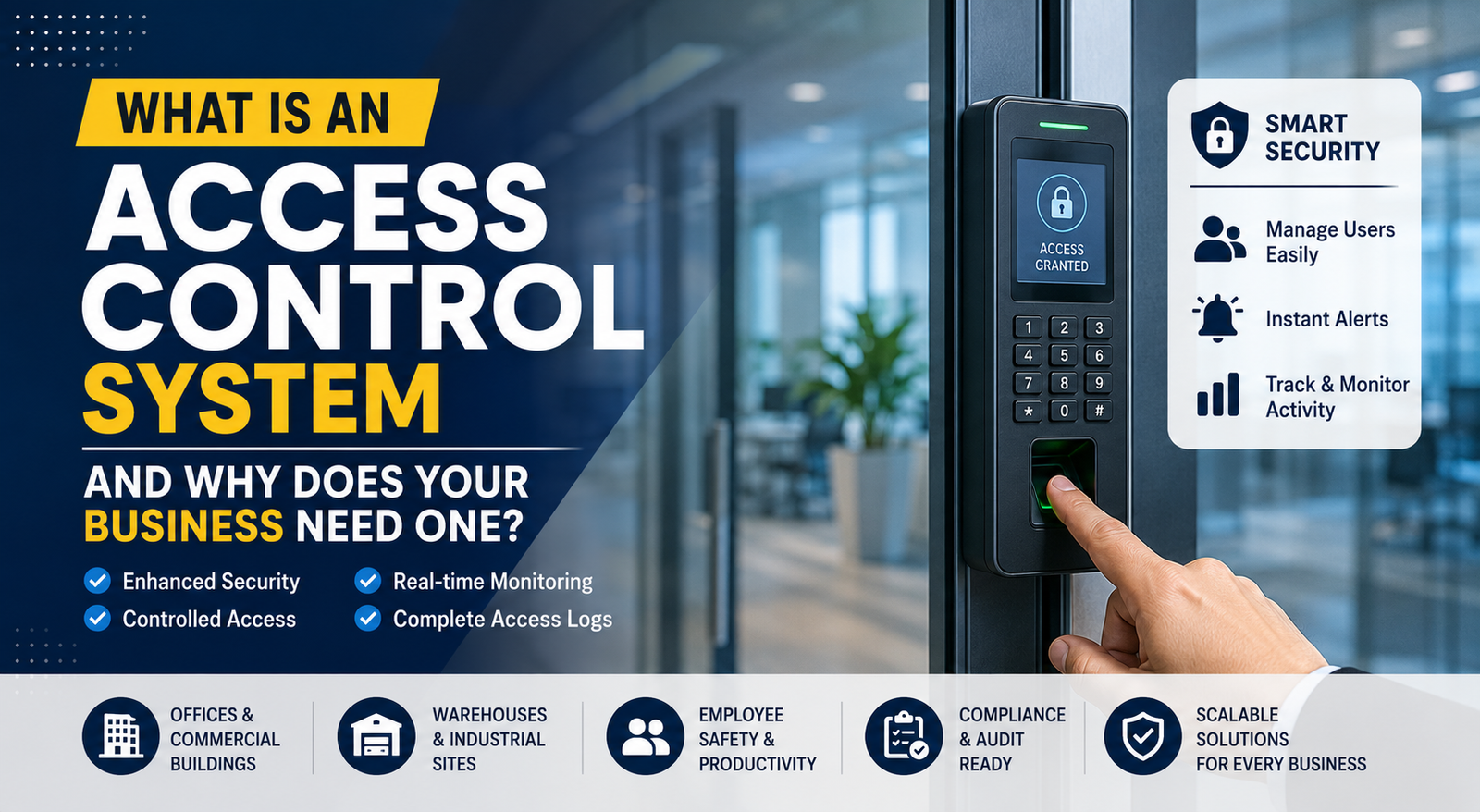
Business security has changed significantly over the past decade. Traditional locks and keys are no longer enough to protect offices, warehouses, retail stores and commercial buildings from modern security threats. As businesses continue to adopt smarter technologies, access control systems have become an essential part of protecting employees, assets and sensitive information.
Whether you manage a small office or a large commercial facility, controlling who enters your premises is just as important as installing CCTV cameras or burglar alarms. A professionally installed access control system allows you to decide who can enter specific areas, when they can enter and how access is monitored.
In this guide, we'll explain what an access control system is, how it works, its benefits and why businesses across London are investing in smarter access management solutions.
What Is an Access Control System?
An access control system is an electronic security solution that regulates and monitors who is allowed to enter a building, office, room or restricted area. Instead of relying on traditional keys, authorised users gain access using methods such as key cards, PIN codes, mobile credentials, biometric recognition or facial identification.
Every access attempt is recorded, giving business owners complete visibility over who entered the property, at what time and through which entrance.
Modern access control systems can operate as standalone units or integrate with CCTV cameras, intruder alarms, video intercoms and visitor management software to provide complete security coverage.
How Does an Access Control System Work?
The process is simple yet highly secure.
- An employee presents their authorised credential, such as a key card or fingerprint.
- The access controller verifies the user's permissions.
- If authorised, the electronic lock unlocks.
- The event is automatically recorded in the system log.
- If access is denied, the door remains locked and administrators can receive instant notifications.
Because every event is logged, business owners can review entry history, investigate incidents and maintain accurate audit records whenever required.
Common Types of Access Control Systems
Key Card Access Systems
Employees use RFID or proximity cards to unlock doors. These systems are widely used in offices, schools, hotels and commercial buildings because they are easy to manage and highly reliable.
PIN Code Access
Users enter a secure PIN to gain entry. PIN-based systems are ideal for smaller businesses or internal restricted areas where physical cards are unnecessary.
Biometric Access Control
Biometric systems verify a user's identity using fingerprints, facial recognition or iris scanning. Since biometric credentials cannot be easily shared or duplicated, they offer one of the highest levels of security available.
Mobile Access Control
Many modern businesses now allow employees to unlock doors using smartphones. Mobile credentials reduce the need for physical cards while providing greater convenience and remote management.
Key Benefits of Access Control Systems
Improved Business Security
One of the biggest advantages of an access control system is preventing unauthorised individuals from entering your premises. Unlike traditional keys, digital credentials can be instantly activated or revoked whenever employees join or leave your organisation.
Better Employee Safety
Limiting access to authorised personnel helps create a safer working environment. Sensitive areas such as server rooms, stockrooms or management offices remain protected at all times.
Complete Access Records
Every entry and exit is automatically recorded, allowing businesses to review activity, investigate incidents and maintain compliance with internal security policies.
Reduced Risk of Lost Keys
Traditional keys can be lost, copied or stolen. Replacing locks across an entire building can be expensive and time-consuming. Digital access credentials eliminate this problem because permissions can be updated instantly through the management software.
Remote Management
Cloud-based access control systems allow administrators to manage users, unlock doors remotely and receive real-time notifications from virtually anywhere.
Which Businesses Benefit Most from Access Control?
Almost every commercial property can benefit from modern access control technology, including:
- Corporate offices
- Retail stores
- Warehouses
- Schools and colleges
- Healthcare facilities
- Apartment buildings
- Hotels
- Industrial sites
- Government buildings
As businesses continue to prioritise security and operational efficiency, access control systems are becoming a standard feature rather than an optional upgrade.
For even greater protection, many organisations combine access control with CCTV systems, Intruder Alarms and Video Intercom Systems to create a fully integrated security solution.
Signs Your Business Needs an Access Control System
If your business still relies on traditional locks and physical keys, it may be time to upgrade. While keys have served businesses for decades, they offer very little flexibility when it comes to managing access, monitoring activity or responding to security risks.
You should consider installing an access control system if:
- Employees frequently lose office keys.
- You need to restrict access to sensitive areas.
- Your business has multiple departments or entrances.
- You want to monitor employee and visitor access.
- You've experienced unauthorised entry or theft.
- You need remote management of your building's security.
- Your company is growing and adding more staff.
If any of these situations sound familiar, upgrading to an electronic access control system can improve both security and operational efficiency.
Can Access Control Be Integrated with Other Security Systems?
Absolutely. One of the biggest advantages of modern access control solutions is their ability to integrate seamlessly with other security technologies.
For example, if someone attempts to access a restricted area without authorisation, the system can automatically trigger multiple security responses, including recording video footage, sending instant alerts to security personnel or activating an alarm.
Businesses often combine access control with:
- CCTV Surveillance Systems
- Intruder Alarm Systems
- Fire Alarm Systems
- Video Intercom & Door Entry Systems
- Security System Maintenance Services
An integrated security solution not only improves protection but also simplifies day-to-day management by bringing multiple systems together under one platform.
Choosing the Right Access Control System
Selecting the right access control solution depends on several factors, including the size of your property, the number of users, your security requirements and future expansion plans.
Before making a decision, consider:
- How many entrances require protection?
- How many employees need access?
- Do you require remote management?
- Would biometric authentication improve security?
- Do you want the system to integrate with CCTV or alarms?
- Will your business expand in the future?
Working with an experienced security installer ensures your system is designed to meet both your current and future needs.
Why Choose Third Eye Security?
At Third Eye Security, we specialise in designing and installing reliable access control systems for businesses across London. Whether you need a simple single-door solution or a fully integrated multi-site security system, our experienced engineers can recommend the right technology for your organisation.
We provide:
- Professional installation
- High-quality access control equipment
- Scalable solutions for growing businesses
- Integration with CCTV and alarm systems
- Ongoing maintenance and technical support
- Tailored security solutions for every business