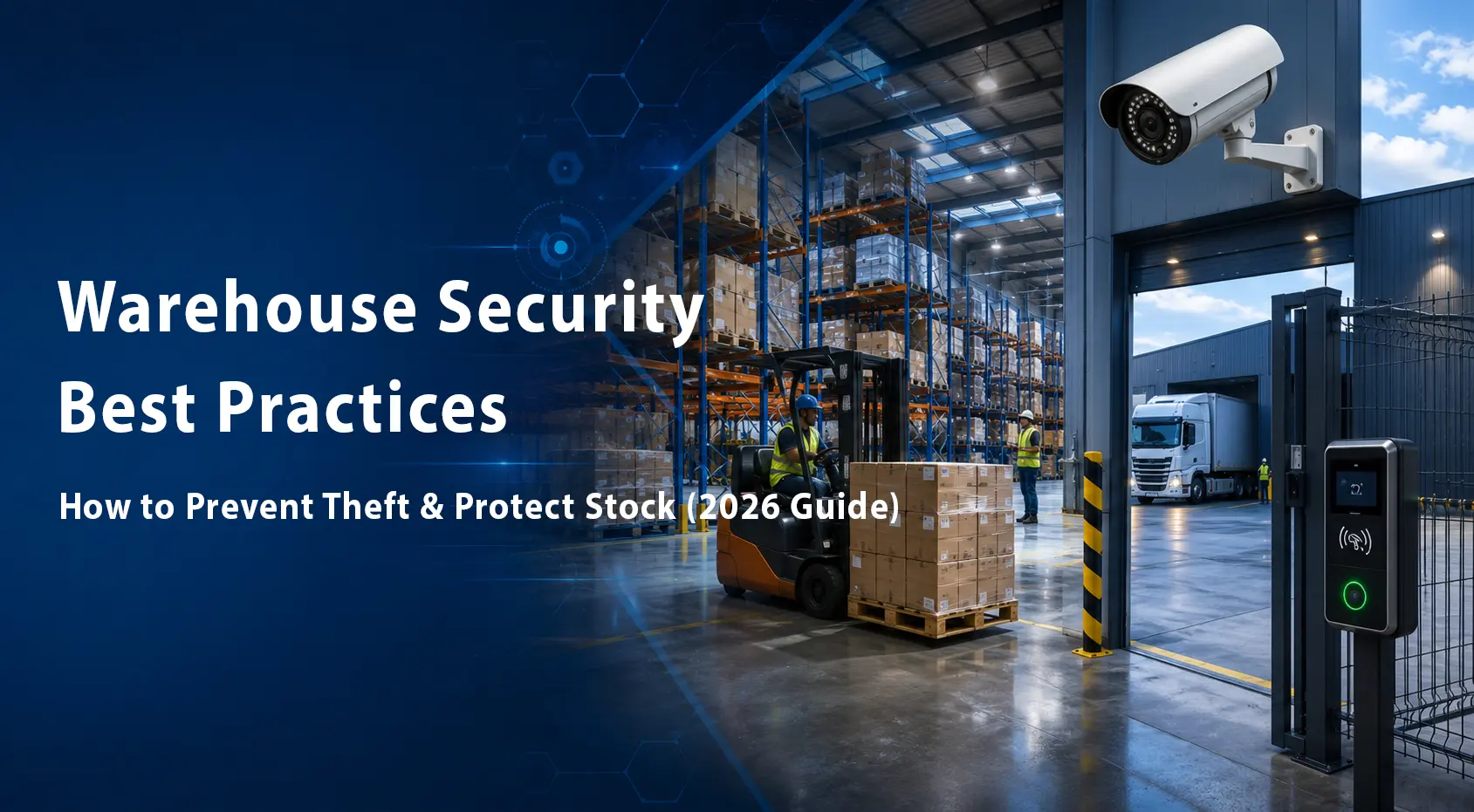
Warehouses are the backbone of countless businesses across the UK. Whether storing retail goods, manufacturing materials, pharmaceutical products or high-value electronics, these facilities hold inventory worth thousands—or even millions—of pounds. Unfortunately, warehouses are also attractive targets for organised theft, unauthorised access, vandalism and internal shrinkage.
As supply chains become increasingly complex, businesses need more than basic locks and alarm systems to keep their operations secure. Modern warehouse security combines intelligent CCTV surveillance, access control, perimeter protection, intruder alarms, security lighting and well-trained employees to create multiple layers of defence.
A security incident doesn't just result in stolen goods. It can cause operational delays, insurance claims, reputational damage and financial losses that impact your entire business.
This comprehensive guide explores the most effective warehouse security best practices for 2026, helping UK businesses reduce risks, safeguard inventory and create a safer working environment for employees and visitors.
Table of Contents
- Why Warehouse Security Matters
- Common Warehouse Security Risks
- 10 Warehouse Security Best Practices
- CCTV for Warehouses
- Access Control Systems
- Perimeter Security
- Loading Bay Security
- Inventory Protection
- Warehouse Security Checklist
- Frequently Asked Questions
Why Warehouse Security Matters
Modern warehouses operate around the clock, handling valuable stock, expensive equipment and constant vehicle movements. With multiple entry points, loading bays and large storage areas, warehouses present unique security challenges that require a carefully planned strategy.
Without effective security measures, businesses may face:
- Stock theft.
- Unauthorised access.
- Employee theft.
- Vandalism.
- Damage to expensive machinery.
- Health and safety incidents.
- Supply chain disruption.
- Higher insurance premiums.
- Loss of customer confidence.
Investing in warehouse security is not simply about preventing crime—it also improves operational efficiency, supports employee safety and helps ensure business continuity.
Common Warehouse Security Risks
Understanding potential threats is the first step towards building an effective warehouse security strategy. While every facility is different, several risks are common across most commercial warehouses.
External Theft
Criminals often target warehouses because of the large quantities of valuable goods stored inside. Poor perimeter security, inadequate lighting and limited surveillance make facilities more vulnerable to break-ins.
Internal Theft
Unfortunately, inventory losses are not always caused by external criminals. Weak access controls, poor stock management and limited monitoring can increase the risk of employee theft.
Unauthorised Access
Visitors, contractors or former employees gaining access to restricted areas can create serious security and safety concerns. Controlling who enters different parts of the warehouse is essential.
Loading Bay Vulnerabilities
Loading bays are among the busiest areas within a warehouse. Frequent vehicle movements, deliveries and collections create opportunities for theft, unauthorised access and inventory discrepancies.
Cyber-Physical Security Risks
Many warehouses now use smart technologies, connected CCTV systems and cloud-based inventory management. Without appropriate cyber security controls, these systems may become targets for cyber attacks.
10 Warehouse Security Best Practices
1. Install Comprehensive CCTV Coverage
CCTV remains one of the most effective deterrents against theft and vandalism. High-definition cameras provide continuous monitoring while helping security teams investigate incidents quickly and accurately.
Warehouse CCTV should cover both internal and external areas, ensuring there are no significant blind spots.
Priority CCTV Locations
- Main entrances and exits.
- Loading bays.
- Vehicle access gates.
- Storage aisles.
- High-value inventory zones.
- Dispatch areas.
- Perimeter fencing.
- Staff entrances.
- Car parks.
Modern AI-powered CCTV systems can automatically detect suspicious activity, identify vehicles, monitor restricted areas and send instant alerts when unusual events occur.
2. Secure Every Access Point
Warehouses often have multiple entrances, roller shutter doors and emergency exits. Every access point should be secured to prevent unauthorised entry while allowing employees to move safely throughout the facility.
Access control systems allow businesses to decide exactly who can enter specific areas and at what times, reducing the likelihood of theft or security breaches.
Access Control Best Practices
- Use electronic access control systems.
- Restrict high-security storage areas.
- Issue individual employee credentials.
- Deactivate lost or unused access cards immediately.
- Review access permissions regularly.
3. Strengthen Perimeter Security
Your warehouse perimeter forms the first line of defence against intruders. Well-maintained fencing, controlled vehicle entrances and effective lighting make it significantly more difficult for criminals to gain access unnoticed.
Combining physical barriers with CCTV surveillance provides a strong deterrent while improving incident detection.
Perimeter Security Checklist
- Install secure perimeter fencing.
- Use automated security gates.
- Maintain bright exterior lighting.
- Install CCTV overlooking boundary lines.
- Regularly inspect fences and gates for damage.
- Restrict vehicle access after business hours.
4. Improve Loading Bay Security
Loading bays are one of the busiest and most vulnerable areas within any warehouse. Goods are constantly arriving and leaving, making these locations attractive targets for theft and inventory loss.
Clear procedures, surveillance and access control help ensure that only authorised personnel can enter loading areas during deliveries and collections.
Loading Bay Security Tips
- Monitor all loading bays with CCTV.
- Verify delivery vehicles before entry.
- Record delivery and collection times.
- Restrict access during unloading.
- Inspect outgoing shipments.
5. Protect High-Value Inventory
Not every product stored in a warehouse carries the same level of risk. High-value goods, sensitive equipment and confidential materials should receive additional protection through restricted access, enhanced CCTV coverage and inventory controls.
Separating valuable stock into secure storage zones helps minimise losses and improves accountability.
Inventory Protection Measures
- Store high-value stock in restricted areas.
- Use additional CCTV coverage.
- Carry out regular inventory checks.
- Limit employee access.
- Monitor stock movements electronically.
6. Implement Strict Employee Security Procedures
Employees play a vital role in maintaining warehouse security. Even the most advanced CCTV cameras and access control systems cannot fully protect a facility if security procedures are ignored or inconsistently followed.
Every member of staff should understand the importance of following security protocols, reporting suspicious behaviour and protecting company assets.
Employee Security Best Practices
- Provide security awareness training.
- Issue personalised access credentials.
- Conduct background checks where appropriate.
- Require staff to wear identification badges.
- Encourage employees to report suspicious activity.
- Restrict access to authorised work areas only.
Creating a strong security culture helps reduce human error and minimises opportunities for both internal and external theft.
7. Upgrade to AI-Powered CCTV Surveillance
Traditional CCTV systems record events, but modern AI-powered surveillance actively helps prevent incidents before they escalate. Intelligent cameras can analyse activity in real time and notify security personnel when suspicious behaviour is detected.
AI technology also reduces false alarms caused by weather, animals or moving vegetation, allowing security teams to focus on genuine threats.
AI CCTV Features
- Human and vehicle detection.
- Perimeter intrusion alerts.
- Line-crossing detection.
- Loitering detection.
- Object removal detection.
- Unauthorised access alerts.
- Vehicle recognition.
- Real-time notifications.
These intelligent features make AI-powered CCTV an excellent investment for warehouses with large outdoor areas or high-value inventory.
8. Improve Security Lighting Throughout the Site
Poor lighting creates opportunities for criminals to move around unnoticed. Well-designed lighting improves visibility, enhances CCTV image quality and provides employees with a safer working environment.
Exterior lighting should cover loading bays, entrances, exits, car parks, vehicle routes and perimeter fencing, while interior lighting should eliminate dark areas between shelving and storage aisles.
Security Lighting Checklist
- Install LED security lighting.
- Use motion-activated floodlights.
- Illuminate loading bays.
- Cover car parks and pedestrian routes.
- Inspect lighting regularly.
- Replace faulty lights immediately.
9. Install a Professionally Monitored Intruder Alarm
An intruder alarm system provides another essential layer of protection, particularly when the warehouse is closed outside normal operating hours. Modern alarm systems can detect unauthorised entry and immediately notify keyholders or a professional monitoring service.
When integrated with CCTV and access control, intruder alarms create a complete warehouse security solution that responds quickly to potential incidents.
Intruder Alarm Benefits
- Immediate intrusion detection.
- 24/7 protection.
- Remote alerts.
- Integration with CCTV.
- Reduced response times.
- Enhanced business continuity.
10. Control Visitors, Contractors and Delivery Drivers
Warehouses receive numerous visitors every day, including contractors, delivery drivers, maintenance engineers and suppliers. Without proper visitor management, unauthorised individuals may gain access to sensitive areas or valuable stock.
A structured visitor management process improves accountability while reducing security risks.
Visitor Management Checklist
- Maintain a visitor register.
- Verify visitor identity.
- Issue temporary visitor badges.
- Escort visitors where necessary.
- Limit access to authorised areas.
- Collect visitor passes before departure.
Warehouse CCTV: The Foundation of Modern Security
A professionally designed CCTV system forms the backbone of warehouse security. High-definition surveillance provides complete visibility across the site while helping managers monitor operations, investigate incidents and protect valuable assets.
Unlike residential CCTV, warehouse surveillance systems are designed to monitor large areas, challenging lighting conditions and constant vehicle movements.
Recommended CCTV Locations
- Main entrances and exits.
- Loading bays.
- Goods receiving areas.
- Dispatch zones.
- Storage aisles.
- High-value inventory locations.
- Vehicle access gates.
- Perimeter fencing.
- Employee entrances.
- Car parks.
Combining fixed cameras with PTZ (Pan-Tilt-Zoom) cameras ensures wide coverage while allowing operators to investigate suspicious activity in greater detail.
Warehouse Access Control Systems
Access control prevents unauthorised individuals from entering restricted areas while allowing employees to move efficiently throughout the facility.
Electronic access systems also provide valuable audit trails showing who entered specific areas and when.
Popular Access Control Options
- Key card systems.
- PIN code readers.
- Mobile phone credentials.
- Biometric fingerprint readers.
- Facial recognition systems.
- Vehicle access barriers.
By integrating access control with CCTV, businesses can instantly verify who accessed a secure area and review associated video footage if required.
Strengthening Perimeter Security
The perimeter is your warehouse's first line of defence. A combination of physical barriers, surveillance and intelligent detection systems helps deter criminals before they reach the building.
Perimeter Security Measures
- High-security fencing.
- Automated security gates.
- Vehicle barriers.
- ANPR (Automatic Number Plate Recognition).
- Perimeter CCTV cameras.
- Motion-activated lighting.
- Intrusion detection sensors.
Regular inspections of fences, gates and lighting should form part of your ongoing warehouse maintenance programme.
Protect Your Inventory with Effective Stock Management
While CCTV cameras and access control systems are essential, they should be supported by robust inventory management processes. Poor stock control can lead to unexplained losses, delayed order fulfilment and financial discrepancies that may go unnoticed for weeks.
By combining physical security with accurate inventory tracking, businesses can quickly identify missing stock, investigate irregularities and improve operational efficiency.
Best Practices for Inventory Protection
- Use barcode or RFID inventory tracking.
- Carry out regular stock counts.
- Separate high-value inventory into secure storage zones.
- Restrict access to inventory management systems.
- Record all stock movements electronically.
- Investigate discrepancies immediately.
- Use CCTV to monitor picking and packing areas.
- Secure returned goods until inspection.
Accurate inventory management not only reduces shrinkage but also improves customer satisfaction by ensuring products remain available and correctly accounted for.
Carry Out Regular Warehouse Security Maintenance
A security system is only effective if it is properly maintained. Cameras with dirty lenses, faulty access control readers or malfunctioning alarms can create vulnerabilities that criminals may exploit.
Routine maintenance helps identify issues before they affect the security of your warehouse and extends the lifespan of your equipment.
Warehouse Security Maintenance Checklist
- Clean CCTV camera lenses.
- Check camera positioning and image quality.
- Test recording equipment and storage devices.
- Inspect access control readers and door locks.
- Verify intruder alarm functionality.
- Test emergency lighting.
- Review system event logs.
- Install firmware and software updates.
- Inspect perimeter fencing and gates.
- Replace damaged security signage.
Scheduling preventative maintenance reduces the likelihood of unexpected equipment failures and ensures your warehouse remains protected throughout the year.
Daily Warehouse Security Checklist
Daily inspections help identify potential issues before they become serious security problems.
- ✔ Lock all external doors when not in use.
- ✔ Verify CCTV cameras are recording correctly.
- ✔ Check loading bays before opening.
- ✔ Inspect perimeter gates.
- ✔ Ensure visitor log is up to date.
- ✔ Confirm alarms are operational.
- ✔ Secure high-value inventory.
- ✔ Report suspicious activity immediately.
Weekly Warehouse Security Checklist
- ✔ Review CCTV footage quality.
- ✔ Test access control systems.
- ✔ Check warehouse lighting.
- ✔ Inspect perimeter fencing.
- ✔ Verify emergency exits remain clear.
- ✔ Test intruder alarm sensors.
- ✔ Inspect loading bay procedures.
- ✔ Review stock discrepancy reports.
Monthly Warehouse Security Checklist
- ✔ Conduct a complete warehouse security audit.
- ✔ Update employee access permissions.
- ✔ Inspect CCTV storage capacity.
- ✔ Test remote monitoring.
- ✔ Review visitor management records.
- ✔ Inspect fire safety equipment.
- ✔ Review emergency procedures.
- ✔ Assess new security risks.
Common Warehouse Security Mistakes
Even warehouses with advanced security systems can become vulnerable if best practices are not consistently followed.
Common Mistakes to Avoid
- Failing to monitor blind spots.
- Sharing employee access cards.
- Leaving loading bay doors open unnecessarily.
- Ignoring CCTV maintenance.
- Poor visitor management.
- Inadequate perimeter lighting.
- Using outdated surveillance equipment.
- Weak password protection for security systems.
- Not reviewing access permissions.
- Delaying security upgrades.
Regular reviews and proactive maintenance help minimise these risks while keeping your security systems operating at peak performance.
Choosing the Right Warehouse Security Provider
Selecting an experienced security company is one of the most important decisions you'll make when protecting your warehouse. A professional installer will assess your premises, identify potential vulnerabilities and recommend a solution tailored to your operational requirements.
Look for a Provider That Offers:
- Free warehouse security surveys.
- Professional CCTV system design.
- Access control installation.
- Intruder alarm systems.
- Perimeter security solutions.
- Remote monitoring options.
- Ongoing maintenance and support.
- Scalable solutions for future expansion.
Working with a trusted security provider ensures your warehouse benefits from reliable equipment, professional installation and long-term support as your business grows.
Protect Your Warehouse with Third Eye Security
Your warehouse is one of your business's most valuable assets. Protect it with a professionally designed security solution from Third Eye Security.
We provide tailored warehouse security solutions including:
- Commercial CCTV Installation
- AI-Powered Surveillance Systems
- Access Control Systems
- Intruder Alarm Systems
- Perimeter Security Solutions
- Remote Monitoring
- Security System Maintenance
Our experienced engineers will carry out a comprehensive site survey, identify security vulnerabilities and recommend the most effective solution for your warehouse.
Contact Third Eye Security today to arrange your free site survey and receive a no-obligation quotation.
Conclusion
Warehouse security is no longer just about installing a few cameras or locking the doors at the end of the working day. Today's warehouses require a comprehensive security strategy that combines advanced technology, well-defined procedures and proactive maintenance to reduce risks and protect valuable assets.
By implementing the best practices outlined in this guide—including intelligent CCTV surveillance, access control, perimeter protection, visitor management, inventory controls and regular security audits—you can significantly reduce the likelihood of theft, improve employee safety and strengthen day-to-day operations.
Every warehouse has unique security requirements based on its size, layout and the type of goods it stores. Working with an experienced security specialist ensures your system is designed to meet your operational needs today while remaining scalable for future growth.
Investing in professional warehouse security not only protects your stock but also enhances customer confidence, supports insurance requirements and helps maintain business continuity in an increasingly challenging security landscape.
Secure Your Warehouse with Third Eye Security
Whether you operate a distribution centre, logistics hub, manufacturing warehouse or storage facility, Third Eye Security provides professional warehouse security solutions tailored to your business.
Our services include:
- Commercial CCTV Installation
- AI-Powered CCTV Systems
- Warehouse Access Control
- Intruder Alarm Systems
- Perimeter Security Solutions
- Remote Monitoring
- Preventative Security Maintenance
Our experienced engineers will carry out a comprehensive site survey, identify potential vulnerabilities and recommend a security solution that protects your warehouse, employees and inventory.
Contact Third Eye Security today to arrange your free site survey and receive a no-obligation quotation.