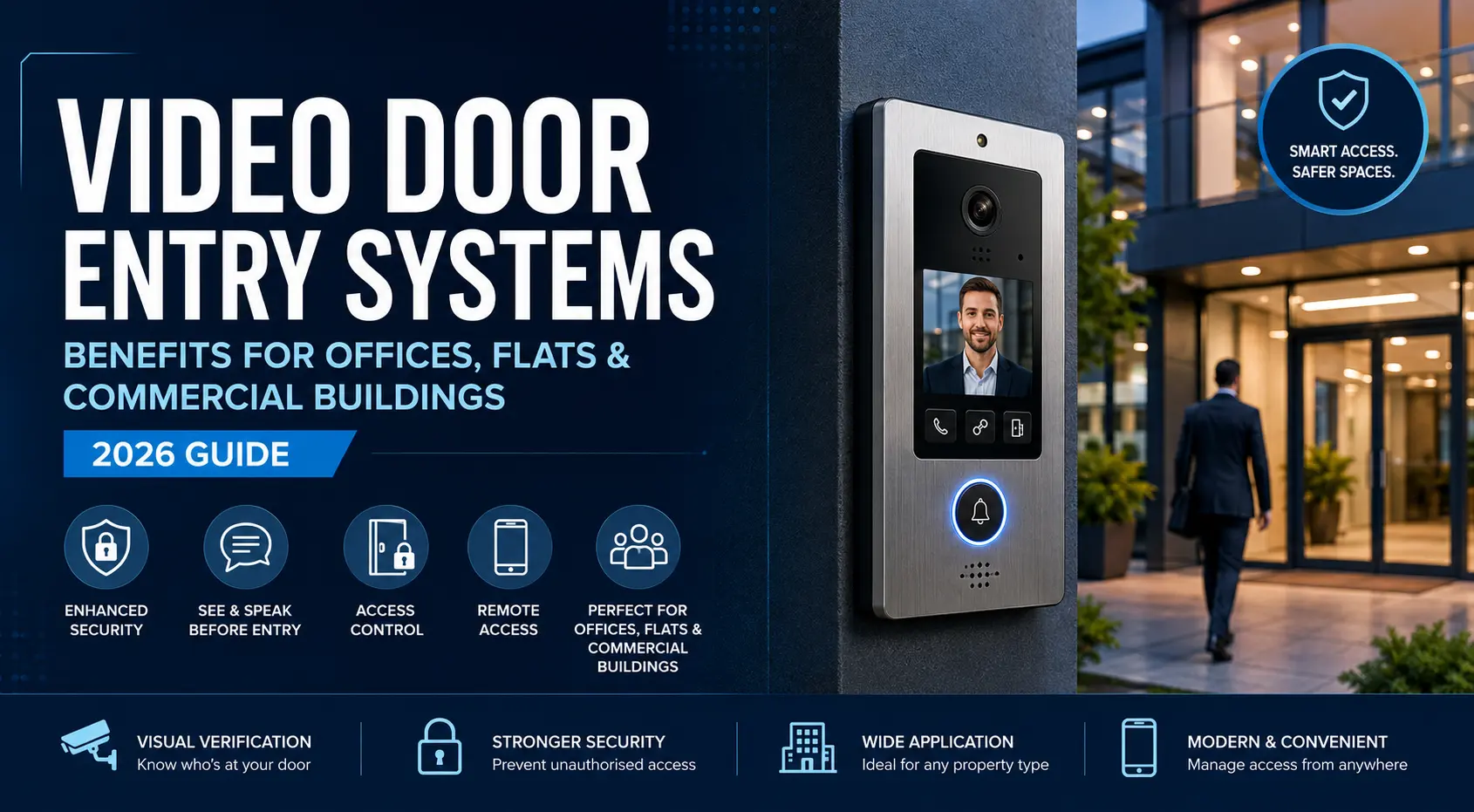
Controlling who enters your property is one of the most important aspects of modern security. Whether you manage an office, apartment block, warehouse, school or commercial building, allowing unrestricted access can expose your premises to theft, vandalism and unauthorised visitors.
Video door entry systems provide a smarter and more secure way to manage access. Instead of opening the door without knowing who is outside, you can see visitors in real time, speak with them and decide whether to grant or deny entry. Modern systems combine high-definition video, two-way audio, remote access and smart integration with access control technology to create a safer environment for employees, residents and visitors.
As businesses and residential properties increasingly adopt intelligent security solutions, video door entry systems have become a popular choice across the UK. They improve convenience while significantly reducing security risks.
In this comprehensive guide, we'll explain how video door entry systems work, the different types available, their key benefits and how to choose the right solution for your property in 2026.
Table of Contents
- What Is a Video Door Entry System?
- How Does a Video Door Entry System Work?
- Types of Video Door Entry Systems
- Benefits of Video Door Entry Systems
- Where Can Video Door Entry Systems Be Used?
- Smart Features to Look For
- Installation Process
- Maintenance Tips
- Cost Factors
- Frequently Asked Questions
What Is a Video Door Entry System?
A video door entry system is an electronic access control solution that allows you to see, speak to and verify visitors before granting them access to your property. Unlike traditional doorbells or audio intercoms, these systems include a camera at the entrance and an indoor monitor or mobile application that displays live video when someone presses the call button.
This additional layer of visual verification helps prevent unauthorised access while improving convenience for both residential and commercial properties.
Modern video door entry systems can also integrate with CCTV, access control systems, smart locks and mobile devices, allowing users to manage entry from almost anywhere.
Main Components of a Video Door Entry System
- Outdoor video door station with HD camera.
- Call button with two-way audio.
- Indoor monitor or touchscreen display.
- Electronic door release mechanism.
- Power supply and controller.
- Mobile app for remote access (on compatible systems).
How Does a Video Door Entry System Work?
The operation of a video door entry system is simple yet highly effective. When a visitor arrives and presses the call button, the outdoor unit activates the camera and sends a live video feed to the indoor monitor or authorised mobile device.
The property owner, receptionist or security team can then:
- See who is at the entrance.
- Speak with the visitor using two-way audio.
- Verify the visitor's identity.
- Unlock the door remotely if access is approved.
- Ignore or reject unknown visitors.
Many modern systems also allow call forwarding to smartphones, enabling users to answer the door even when they are away from the property.
Typical Visitor Journey
- Visitor presses the door station call button.
- The indoor monitor or mobile app receives the call.
- Live video and audio are activated.
- The user verifies the visitor.
- Access is granted or denied remotely.
- Entry activity can be logged for future reference.
Types of Video Door Entry Systems
Different properties require different types of video entry solutions. Choosing the right system depends on the size of the building, the number of users and the level of security required.
1. Audio & Video Door Entry Systems
These systems combine two-way audio with live video, allowing users to identify visitors before opening the door. They are commonly used in offices, homes and small commercial premises.
2. IP Video Door Entry Systems
Internet Protocol (IP) systems connect to your network, enabling remote management through smartphones, tablets or desktop computers. They are ideal for businesses that require flexible access control.
Designed for apartment buildings and residential developments, these systems allow multiple residents to receive calls independently while sharing a common entrance panel.
4. Wireless Video Door Entry Systems
Wireless systems reduce installation complexity by using Wi-Fi or other wireless communication methods. They are often suitable for smaller properties and retrofit projects.
5. Integrated Access Control Systems
Many businesses choose integrated solutions that combine video entry, access control, CCTV surveillance and electronic locking into a single security platform.
Key Benefits of Video Door Entry Systems
Video door entry systems provide far more than visitor convenience. They strengthen building security, improve operational efficiency and create a better experience for employees, residents and guests.
1. Enhanced Security
Being able to visually verify visitors before unlocking the door significantly reduces the risk of unauthorised access, tailgating and opportunistic crime.
2. Two-Way Communication
Built-in microphones and speakers allow clear communication with visitors before granting access, helping staff or residents make informed decisions.
3. Remote Door Control
Many systems allow authorised users to unlock doors remotely through an indoor monitor or secure mobile application.
4. Improved Visitor Management
Reception staff can verify visitors quickly, reducing waiting times while maintaining better control over who enters the building.
5. Integration with Other Security Systems
Modern video door entry systems can integrate with CCTV cameras, access control, intruder alarms and smart building management systems to provide a complete security solution.
6. Better Safety for Employees and Residents
Whether installed in an office, apartment building or commercial property, video verification helps create a safer environment by ensuring only authorised individuals gain access.
Where Can Video Door Entry Systems Be Used?
Video door entry systems are highly versatile and suitable for a wide range of residential, commercial and public sector properties. Whether you need to control access to a single office entrance or manage hundreds of residents in an apartment complex, these systems provide a secure and convenient solution.
Below are some of the most common applications across the UK.
1. Office Buildings
Modern offices receive a constant flow of employees, clients, contractors and delivery drivers. Without an effective visitor management process, unauthorised individuals can easily gain access to sensitive workspaces.
A video door entry system enables reception staff or office managers to identify visitors before unlocking the entrance, reducing security risks while maintaining a professional welcome.
Benefits for Offices
- Verify visitors before granting access.
- Reduce unauthorised entry.
- Integrate with office access control systems.
- Improve visitor management.
- Protect confidential business areas.
- Support hybrid and remote working environments.
2. Flats & Apartment Buildings
Multi-occupancy residential buildings require secure access while ensuring convenience for residents. Video door entry systems allow occupants to see and speak with visitors before opening the main entrance, improving safety without requiring them to leave their flat.
Many modern systems also support smartphone access, enabling residents to answer calls remotely even when they are away from home.
Benefits for Apartment Blocks
- Increase resident safety.
- Reduce unwanted visitors.
- Manage deliveries more efficiently.
- Support multiple apartments from one entrance panel.
- Provide convenient remote access.
3. Commercial Buildings
Commercial properties often accommodate multiple businesses, making secure visitor access essential. Video door entry systems help building managers monitor visitors while restricting access to authorised personnel only.
When integrated with electronic locks and access control, these systems provide a seamless and professional entry experience.
Suitable Commercial Properties
- Business centres.
- Corporate headquarters.
- Shared office buildings.
- Industrial estates.
- Retail complexes.
- Mixed-use developments.
4. Schools, Colleges and Universities
Educational facilities have a responsibility to safeguard students, teachers and visitors. Video door entry systems help schools verify visitors before granting access while reducing the likelihood of unauthorised individuals entering the premises.
Reception staff can identify parents, contractors and suppliers without compromising site security.
Education Sector Benefits
- Protect students and staff.
- Control visitor access.
- Improve safeguarding procedures.
- Monitor school entrances.
- Reduce unauthorised access.
5. Healthcare Facilities
Hospitals, medical centres, dental clinics and care homes often need to balance security with accessibility. Video door entry systems allow healthcare providers to verify visitors while protecting patients, staff and sensitive medical areas.
They are particularly valuable in facilities with restricted treatment rooms, pharmacies or administrative offices.
Healthcare Benefits
- Protect patients and healthcare professionals.
- Restrict access to sensitive departments.
- Improve visitor management.
- Support infection control procedures.
- Provide secure access outside normal hours.
6. Warehouses and Industrial Facilities
Warehouses frequently receive delivery drivers, contractors and suppliers throughout the day. A video door entry system allows warehouse managers to verify visitors before opening security gates or staff entrances.
When integrated with CCTV and access control systems, warehouse operators gain complete visibility over who enters the site.
Industrial Benefits
- Protect valuable stock.
- Verify deliveries before entry.
- Reduce unauthorised site access.
- Improve loading bay security.
- Support 24/7 warehouse operations.
Smart Features to Look For
Today's video door entry systems offer much more than a camera and intercom. Advanced features improve convenience, increase security and simplify day-to-day building management.
HD Video Quality
High-definition cameras provide clear images, making it easier to identify visitors in both daylight and low-light conditions.
Night Vision
Infrared night vision allows entrances to remain visible even in complete darkness.
Two-Way Audio
Built-in microphones and speakers enable clear conversations with visitors before granting access.
Mobile App Integration
Many systems allow users to answer calls, view live video and unlock doors directly from a smartphone.
Cloud Connectivity
Cloud-enabled systems provide secure remote access, software updates and event management from virtually anywhere.
Electronic Lock Integration
Video entry systems can integrate with electric strikes, magnetic locks and automated doors for seamless access control.
Access Logs
Many commercial systems record visitor activity, creating an audit trail for security and compliance purposes.
How to Choose the Right Video Door Entry System
Selecting the right system depends on your property's layout, the number of users and your security requirements. A professional security assessment can help determine the most suitable solution.
Consider the Following:
- Number of entrances.
- Single or multi-tenant property.
- Indoor monitor or mobile app.
- Required level of security.
- Integration with CCTV.
- Access control compatibility.
- Future expansion plans.
- Maintenance requirements.
Choosing a scalable system ensures your security solution can grow alongside your business or residential development.
Video Door Entry System Installation Process
Professional installation is essential to ensure your video door entry system operates reliably and provides the level of security your property requires. A correctly installed system delivers clear video, high-quality audio, dependable remote access and seamless integration with other security technologies.
While installation requirements vary depending on the property, most projects follow a structured process.
Step 1: Site Survey
A qualified security engineer begins by assessing the property, identifying entry points, evaluating cabling routes and understanding your security requirements.
During the Survey:
- Inspect all entrance locations.
- Identify suitable camera positions.
- Assess existing access control systems.
- Evaluate internet and power availability.
- Recommend the most suitable equipment.
Step 2: System Design
Following the survey, the installer designs a tailored solution based on the size of the property and the number of users.
The design considers:
- Number of entrances.
- Indoor monitor locations.
- Mobile app requirements.
- Electronic locking mechanisms.
- Visitor call routing.
- Future expansion.
Step 3: Equipment Installation
The outdoor video panel, indoor monitors, controllers and electronic locking devices are installed in accordance with the approved design.
Professional installation ensures all equipment is securely mounted, weather-resistant where necessary and positioned for optimal performance.
Step 4: Configuration & Testing
Once installed, the system is configured and thoroughly tested to ensure every component operates correctly.
Testing Includes:
- Video quality.
- Two-way audio.
- Door release function.
- Remote smartphone access.
- Access permissions.
- Power backup (if installed).
Step 5: User Training
Before the project is completed, users should receive guidance on operating the system, managing visitor calls and using the mobile application.
Proper training helps ensure the system is used effectively from day one.
Wired vs Wireless Video Door Entry Systems
Both wired and wireless systems provide excellent security, but the right choice depends on your property's construction, budget and future expansion plans.
| Feature | Wired System | Wireless System |
|---|---|---|
| Reliability | Excellent | Very Good |
| Installation | More complex | Faster |
| Maintenance | Low | Moderate |
| Large Buildings | Ideal | Suitable with planning |
| New Builds | Highly Recommended | Good Option |
| Retrofit Projects | Possible | Excellent Choice |
For larger commercial buildings and apartment developments, wired IP systems often provide greater long-term reliability, while wireless solutions are popular for smaller offices and retrofit installations.
Video Door Entry System Maintenance
Routine maintenance helps ensure your video door entry system continues to operate efficiently and provides dependable security throughout its lifespan.
Regular inspections can identify minor issues before they become costly repairs.
Maintenance Checklist
- Clean the outdoor camera lens.
- Check microphone and speaker quality.
- Test door release operation.
- Inspect cables and connectors.
- Verify remote access functionality.
- Update system firmware.
- Inspect weather protection seals.
- Review user access permissions.
- Test backup power supply.
- Record maintenance activities.
What Affects the Cost of a Video Door Entry System?
The cost of installation varies depending on the complexity of the project and the features required. While smaller residential systems are generally more affordable, commercial and multi-tenant installations require additional equipment and configuration.
Main Cost Factors
- Number of entrances.
- Number of indoor monitors.
- Single or multi-tenant property.
- Camera resolution.
- Smartphone integration.
- Electronic locking systems.
- Access control integration.
- Installation complexity.
- Cabling requirements.
- Ongoing maintenance agreements.
Choosing a professionally installed system often provides better long-term value than selecting the lowest-cost option, as reliability, support and future scalability are equally important.
Common Mistakes to Avoid
Even the best equipment may fail to provide adequate protection if it is poorly planned or incorrectly installed.
Avoid These Common Mistakes:
- Choosing a system without considering future expansion.
- Installing the outdoor camera at the wrong height.
- Ignoring lighting conditions around the entrance.
- Using poor-quality internet connections for IP systems.
- Failing to update software and firmware.
- Not changing default passwords.
- Skipping regular maintenance.
- Ignoring integration with CCTV and access control.
- Providing unrestricted user permissions.
- Selecting equipment based solely on price.
Why Choose a Professional Installer?
A professionally installed video door entry system delivers greater reliability, improved security and a better user experience. Experienced installers understand how to design systems that meet the unique requirements of residential and commercial properties.
A Professional Installer Should Provide:
- Free site survey.
- Tailored system design.
- High-quality equipment.
- Professional installation.
- User training.
- Maintenance and servicing.
- Technical support.
- Future upgrade options.
Upgrade Your Property Security with Third Eye Security
Whether you're securing an office, apartment building, school, warehouse or commercial property, Third Eye Security provides professional video door entry system installation tailored to your requirements.
Our experienced engineers design and install reliable access solutions that integrate seamlessly with CCTV, access control and other security systems, helping you protect people, property and valuable assets.
Contact Third Eye Security today to arrange a free site survey and receive a no-obligation quotation for your video door entry system.