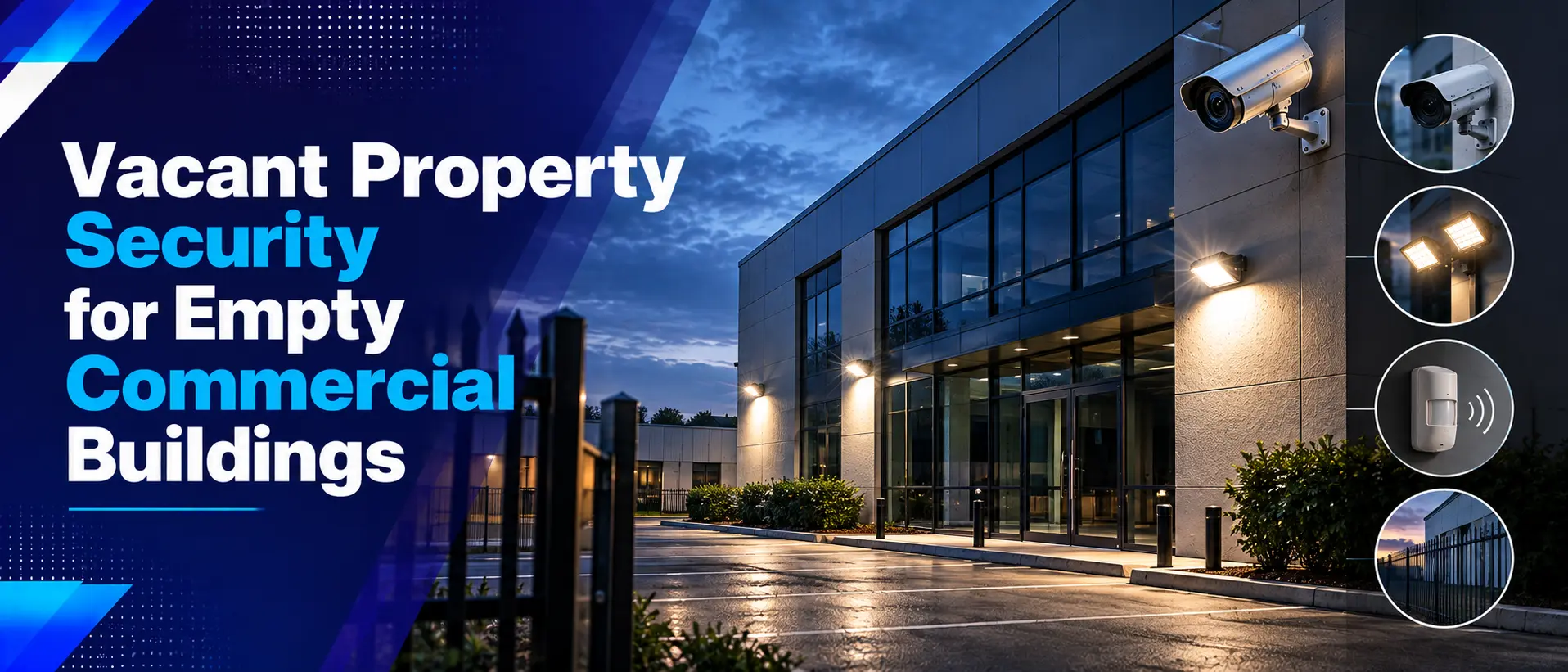
An empty commercial building can still contain valuable equipment, fixtures, materials and infrastructure. Even when a business has moved out or a property is waiting for a new tenant, the building may remain exposed to unauthorised access, theft, vandalism or damage.
Vacant property security is about more than locking the doors. It involves assessing the site, securing possible entry points, maintaining visibility, monitoring activity and arranging regular inspections. The right approach depends on the building, its location, how long it will remain empty and the assets or systems inside.
This guide explains practical ways to protect vacant offices, warehouses, retail units and other commercial premises using physical security, CCTV, intruder alarms, lighting and routine checks.
Why Do Vacant Commercial Properties Need Security?
A property that is no longer occupied may receive less day-to-day attention than an active workplace. Staff may no longer be present to notice unusual activity, report damage or check that doors and windows have been secured.
Vacant buildings can also have changing security needs. A property may be empty for a few days during a relocation, several weeks while work is completed, or longer while it is marketed or prepared for a new use.
Common concerns include:
- Unauthorised entry through doors, windows, gates or damaged sections of the building
- Theft of tools, equipment, copper, fixtures or materials
- Vandalism and damage to internal or external areas
- Unauthorised occupation or use of the premises
- Damage that goes unnoticed because inspections are infrequent
- Water leaks, electrical faults or other building issues that are not identified promptly
- Reduced visibility around entrances, service yards and boundaries after dark
Not every vacant property will face the same risks. A structured review can help owners and property managers identify which measures are appropriate for the building and its surroundings.
Start with a Vacant Property Security Assessment
Before installing equipment or changing access arrangements, review the property as a whole. A site assessment should consider the building's layout, condition, access points, external areas, existing security equipment and expected vacancy period.
Inspect the building exterior
Walk around the perimeter and look for damaged fencing, unsecured gates, broken windows, poorly fitting doors and areas that are difficult to see from the street or neighbouring premises. Note any access routes that could be concealed by vegetation, stored materials or building features.
Review internal access and assets
Identify rooms containing equipment, tools, stock, electrical systems or other items that may need additional protection. Check whether internal doors, storage rooms and plant areas can be secured independently.
Check existing security systems
Confirm whether CCTV cameras, intruder alarms, access control and external lighting are operational. Check who can access the systems, who receives alerts and what arrangements are in place if an issue is detected.
A broader business security risk assessment can help organise these checks and identify measures that should be prioritised.
1. Secure Doors, Windows and Other Entry Points
Physical security is the starting point for protecting an empty building. CCTV and alarms can help detect activity, but they should work alongside suitable locks, doors, windows, gates and perimeter barriers.
Check external doors
- Confirm that all external doors close and lock correctly.
- Inspect frames, hinges, handles and locking hardware for visible damage.
- Secure secondary entrances, rear doors and service access points.
- Remove unnecessary access devices or keys from former staff and contractors.
- Keep a record of authorised keyholders and access arrangements.
Inspect windows and glazed areas
Check ground-floor windows, rooflights, loading-bay glazing and other accessible openings. Repair damaged fittings and consider suitable physical protection where the assessment identifies a need.
Secure gates and perimeter access
For properties with yards, service roads or external storage, check that gates close properly and that access is controlled. Avoid leaving ladders, tools or loose materials in locations where they could make access easier.
2. Use CCTV to Monitor Vacant Premises
CCTV can help property owners and security teams monitor entrances, external areas and selected internal spaces without requiring someone to remain on site continuously. The system should be designed around the building's layout and the areas that need observation.
Where should CCTV cameras be positioned?
Depending on the site assessment, cameras may be considered for:
- Main entrances and secondary doors
- Loading bays and service yards
- Vehicle gates and access roads
- External storage areas
- Perimeter approaches and vulnerable boundary sections
- Internal corridors or areas containing valuable equipment, where appropriate
Camera placement should account for lighting, viewing angles, obstructions and the level of detail required. Avoid assuming that a camera covers an area simply because it is pointed towards it. Review the actual footage, including at night.
For more detail on system planning, see our commercial CCTV installation guide and commercial CCTV camera placement guide.
Consider remote monitoring and alerts
Depending on the system, CCTV may allow authorised users or monitoring personnel to view footage remotely or receive event notifications. Confirm who is responsible for reviewing alerts and what action should follow an incident.
Remote access should be configured securely, with access limited to authorised users. Keep account details and system permissions under review, particularly when contractors or property managers change.
3. Install or Maintain an Intruder Alarm
An intruder alarm can provide an additional layer of protection by detecting activity in selected areas and generating an alert. For a vacant property, the alarm design should reflect the building's layout, access points and expected visits by authorised personnel.
Review the alarm coverage
Consider which doors, windows, rooms and internal routes require detection. The system should be planned to reduce avoidable false alarms while still covering the areas identified in the security assessment.
Confirm who receives alerts
An alarm is only part of the response process. Establish who is notified, who can attend the site and what steps should be followed if an alarm activates. Keep contact details current and make sure authorised keyholders understand their responsibilities.
Our article on commercial intruder alarm systems explains how alarm systems can form part of a wider business security arrangement.
4. Improve External Lighting and Visibility
Lighting can help make entrances, walkways, yards and boundary areas easier to see. It can also support CCTV performance when fixtures are positioned to illuminate the camera's intended field of view without causing glare.
Depending on the property, consider:
- Lighting around main and secondary entrances
- Motion-activated lights for selected access routes
- Suitable illumination for gates and service yards
- Lighting around external equipment or storage areas
- Controls that reflect the property's operating and inspection schedule
Avoid directing lights into neighbouring properties or towards CCTV lenses. Test the arrangement after dark and review areas where shadows or glare reduce visibility.
Read our related guide: Commercial Security Lighting: How to Protect Business Premises.
5. Arrange Regular Property Inspections
Security equipment can help identify activity, but it does not replace physical inspections. Regular visits can reveal damage, failed equipment, water leaks, unsecured openings or changes around the property that may not be obvious from remote monitoring alone.
The inspection frequency should reflect the property, its condition, the vacancy period, the security assessment and any relevant insurance or management requirements. Keep a record of visits, observations, repairs and follow-up actions.
What should an inspection include?
- Check external doors, windows, gates and visible locks.
- Look for signs of attempted entry, damage or unauthorised access.
- Confirm that CCTV, alarms and lighting appear operational.
- Check for leaks, unusual smells, visible electrical issues or other building concerns.
- Look for rubbish, combustible materials or objects accumulating near the building.
- Confirm that access routes and emergency exits are not obstructed.
- Record findings and arrange follow-up work where required.
6. Manage Keys, Contractors and Authorised Access
Vacant properties may still need access for maintenance teams, surveyors, cleaners, estate agents, contractors or prospective tenants. Clear access arrangements help reduce confusion about who is permitted to enter and when.
Good access management can include:
- Maintaining a current list of authorised keyholders and visitors
- Recording keys, access cards and codes issued to contractors
- Changing or revoking access when a person no longer needs it
- Using temporary access arrangements where suitable
- Confirming that the building is secured after each visit
- Keeping a simple visit and maintenance log
If the property has electronic access control, review user permissions and remove access that is no longer required. For a wider overview of security components, see commercial security systems.
7. Protect Different Types of Vacant Commercial Property
Empty offices
Offices may contain computers, screens, furniture, networking equipment and building systems. Secure entrances, review internal access, and consider whether equipment should be removed or stored in a more secure area. Check reception doors, side entrances, car parks and shared access points.
Vacant warehouses
Warehouses often have large doors, loading bays, yards and substantial internal spaces. Review vehicle access, roller shutters, perimeter fencing, external storage and camera coverage. Pay attention to areas where stacked goods or equipment may obstruct visibility.
Our guide to warehouse security best practices covers additional measures for commercial storage and distribution environments.
Empty retail units
Retail properties may have extensive glazing, rear delivery access and shopfront areas facing public streets. Check doors, shutters, rear access and any shared service corridors. Keep the frontage and surrounding area tidy so that damage or unusual activity is easier to notice.
Related advice is available in our retail security guide.
Properties awaiting redevelopment
Buildings awaiting refurbishment or demolition may have changing access routes and temporary equipment on site. Review security whenever the site layout changes, particularly after contractors remove barriers, fencing or temporary facilities.
For sites involving active building work, see our guide to construction site security.
Vacant Property Security Checklist
Use this checklist when preparing a commercial property for a vacancy period or reviewing its current security arrangements.
| Security area | Action to check | Complete |
|---|---|---|
| Doors and windows | Inspect locks, frames, glazing and secondary entrances. | ☐ |
| Perimeter | Check gates, fencing, boundaries and access routes. | ☐ |
| CCTV | Confirm camera coverage, recording and authorised access. | ☐ |
| Intruder alarm | Check system status, detection coverage and alert contacts. | ☐ |
| Lighting | Review entrances, paths, yards and dark areas after sunset. | ☐ |
| Keys and access | Update keyholders and remove access no longer required. | ☐ |
| Valuable items | Remove, secure or document equipment and materials. | ☐ |
| Inspections | Set a visit schedule and maintain inspection records. | ☐ |
| Building condition | Check for leaks, damage and other visible maintenance issues. | ☐ |
| Response arrangements | Confirm who responds to alarms, alerts and reported issues. | ☐ |
Common Vacant Property Security Mistakes
Assuming that locking the front door is enough
Secondary entrances, loading bays, windows, roof access and perimeter gates also need attention. Review all potential access points rather than focusing only on the main entrance.
Leaving security equipment unchecked
A camera may lose power, a sensor may become obstructed or a light may fail. Include equipment checks in the inspection process and arrange repairs when issues are identified.
Not updating access permissions
Former employees, contractors or property representatives may retain keys or access credentials. Review permissions when responsibility for the building changes.
Relying on alerts without a response plan
Notifications need to reach someone who knows what to do next. Confirm contact details, attendance arrangements and escalation steps before the property becomes vacant.
Failing to review security as the site changes
Refurbishment, new fencing, removed equipment or changes to neighbouring buildings can affect camera views, lighting and access routes. Reassess the arrangement whenever the site changes significantly.
How Third Eye Security Can Help
Protecting a vacant commercial property may involve several connected measures, including CCTV, intruder alarms, access control and external security lighting. The right combination depends on the building's layout, vacancy period, access requirements and identified risks.
Third Eye Security can help businesses review their commercial security requirements and consider suitable options for their premises.
Contact Third Eye Security to discuss security for your vacant commercial property.